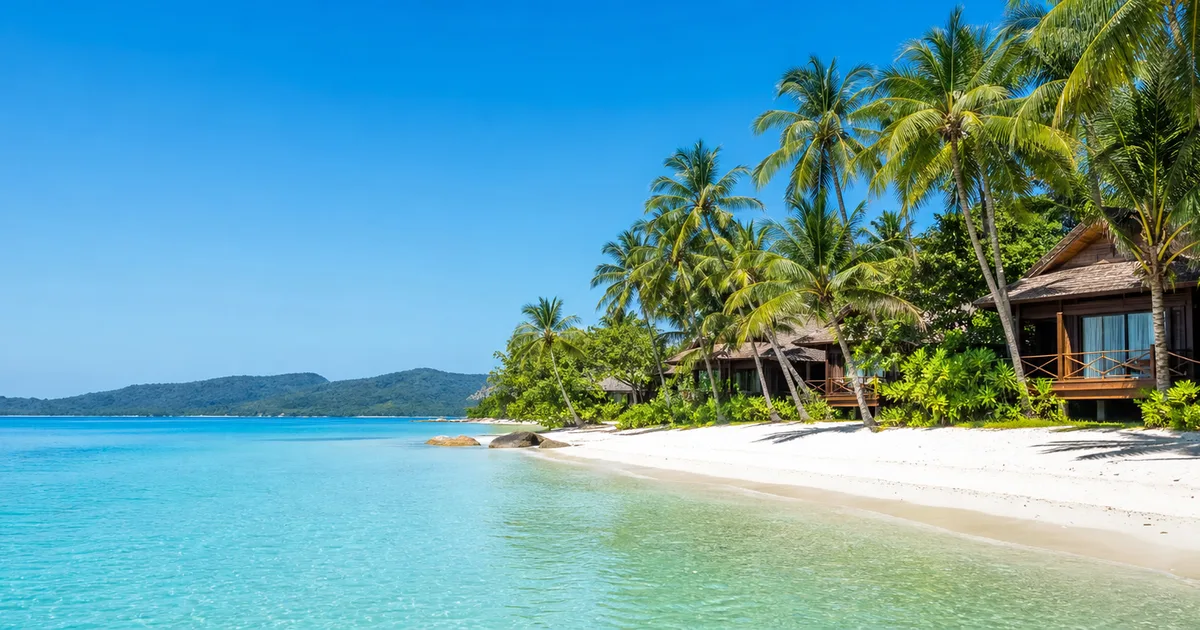
Phu Quoc Dry Season: Best Months for Bungalow Travel
By Phu Quoc Bungalow Owners · Updated August 2026 · 7 min read
- Dry season: November through April. The southwest monsoon is gone; west-coast beaches are calm and swimmable.
- Best months: December–March. Flattest sea, clearest skies, best snorkelling visibility (Jan–Feb peak).
- Peak prices and booking crunch: Christmas–New Year and Tet fill up 6–8 weeks ahead. Book early.
- November and April offer dry-season conditions at 15–20% lower rates — good value shoulder months.
- What to budget: beachfront bungalows run roughly $35–90/night in peak season. Current rates here.
- Sea on Long Beach stays 27–29°C and calm from November to April; monsoon chop returns in May.
In This Guide
What Does the Phu Quoc Dry Season Actually Mean for Bungalow Guests?
The dry season on Phu Quoc runs from November through April. During these six months the southwest monsoon has passed, northeast winds keep the sky clear most days, and the west-coast beaches — where most bungalows sit — have calm, swimmable water.
From May through October, the southwest monsoon reverses the picture: afternoon squalls, regular swells on Long Beach, humidity that climbs into the uncomfortable range, and occasional weeks of overcast sky. It is not unvisitable — and the east coast beaches like Bai Sao stay calm because the monsoon blows in from the opposite direction — but for a beach-and-bungalow holiday, the dry season is the season.
As bungalow owners since 2018, we've learned that guests who arrive in November–April rarely complain about weather. Guests who arrive in July sometimes do. Not always — there are beautiful weeks in wet season too — but the dry season removes the uncertainty. That is what you are paying for when peak-season rates apply.
What Is Each Month of the Dry Season Actually Like?
November is transition. The first two weeks can still throw a leftover monsoon shower — not daily, but not impossible. By mid-November the air dries out noticeably and the sea on Long Beach settles. Prices are 15–20% below December peak. We personally like recommending November to guests who want elbow room at the restaurants and don't need the December guarantee.
December and January are the best months, full stop. Sunrise sits around 6:05–6:20 AM, the evenings are cool enough that you actually want a light layer after 9 PM, and the sea is glass-flat most mornings. Snorkelling visibility on the coral patches 200–400 metres offshore Long Beach is best in December and January — I've had guests come back raving about the water clarity. The downside: this is also when we're fully booked and prices are at their highest.
February includes Tet, the Vietnamese Lunar New Year, which falls in late January or February depending on the year. Domestic tourism spikes hard around Tet — the island gets busy in a way it doesn't at Christmas. If you want to experience Tet festivities, it's worth it; if you want a quiet bungalow week, time your trip around it. We recommend checking the Tet date for your target year before booking.
March is the sweet spot for many guests: weather reliably dry, sea still calm, prices softening slightly from the January peak, and fewer package tourists than December–January. We fill up in March but not as urgently as Christmas. Three or four weeks' notice usually secures something. Plankton blooms can cloud the inshore water briefly in March — nothing dangerous, but visibility for snorkelling is less predictable than January.
April is the last dry-season month and the hottest — daytime temperatures reach 31–33°C, the highest of the year. The sea is still calm but you notice the humidity building. Prices drop noticeably from March. Late April you start to feel the monsoon preparing, with clouds building in the afternoon. For guests who want dry weather without the peak prices, April is underrated.
What Are the Sea Conditions Like for Bungalow Guests?
Long Beach faces west, which means the southwest monsoon hits it directly. From November through April, the wind direction reverses — northeast — and the west coast goes calm. Water temperature holds at 27–29°C across the dry season. Not much variation; it never feels cold.
The sea surface in December and January is flat enough that you can see the sandy bottom in 1.5–2 metres of water from the shoreline. Jellyfish are rare before April; I've seen a few aggregations in late March but nothing like the August weeks when you genuinely want to stay out of the water. The small wooden boats running snorkel trips from the beach operate daily in dry season and stop frequently during wet-season swells.
For the full picture on which beaches work when, including the east-coast options that stay calm year-round, see our beach guide for bungalow guests. For Long Beach specifically — the beach the bungalows actually sit on — the Long Beach bungalow guide covers the north-versus-south stretch question.
What Do Bungalows Cost in Dry Season, and How Far Ahead Should You Book?
For Christmas (December 22 – January 3) and Vietnamese Lunar New Year (Tet, date varies by year), book 6–8 weeks ahead — we fill completely in that window most years. For January–February outside those holidays, 3–4 weeks is usually enough. March and April are easier to book last-minute, though the best bungalows still go early.
Dry-season bungalow rates on Phu Quoc run roughly $35–90 per night for a quality beachfront or garden unit, depending on size and amenities. December through February commands the highest prices — often 25–40% above the May–September low-season baseline. April prices drop noticeably as the season thins out. Check our current rates at the pricing page, as rates shift with demand.
One thing worth factoring in: booking directly with us saves the OTA commission (typically 15–20%), which at dry-season rates on a 7-night stay adds up to a meaningful amount. We honour the same cancellation terms as the platforms — free cancellation up to 7 days before arrival. WhatsApp is the fastest way to check dates.
What Activities Work Best in the Phu Quoc Dry Season?
The dry season is ideal for island motorbike trips, snorkelling day tours to the An Thoi archipelago in the south, kayaking off Long Beach, and visiting the Duong Dong night market without rain gear. Pepper plantation visits and the Sao Beach day trip are also comfortable in dry conditions. Most of these activities shut down or become unpleasant during wet-season squalls.
The An Thoi snorkelling boats depart from An Thoi Port in the south — roughly 25 km by road from the Long Beach bungalow cluster. In dry season these run daily, usually leaving at 8:00 AM and returning by 3:00–4:00 PM. The route covers three to four small islands in the archipelago. In wet season the same operators either cancel or move to the calmer east-facing spots, and the experience is considerably less reliable.
One underrated dry-season activity: doing the island circuit by motorbike. The road to the north — through Ganh Dau and along the coast — is beautiful in clear weather and takes about three hours with stops. In wet season that route can be slippery and the views are often blocked by cloud. We include a free motorbike with stays of 3+ nights, specifically because most of the good excursions need one.
Markets and street food are accessible year-round, but the Duong Dong night market — about 6 km north of the main bungalow cluster — is genuinely better in dry season. Sitting outside with a plate of grilled squid from Nguyen Van Cu stall (the one with the blue awning, run by the same family for 12 years as of 2026) is different when it is not raining.
Dry-Season Month Comparison at a Glance
All price tiers are relative to December peak = 100%. Booking lead times are typical for our bungalows; popular properties fill faster.
| Month | Sea conditions | Rain risk | Price level | Book ahead |
|---|---|---|---|---|
| November | Settling — calm by late Nov | Low–moderate (early Nov) | ~80% of peak | 1–2 weeks |
| December | Calm, best visibility | Very low | 100% (peak) | 6–8 weeks (Xmas) |
| January | Flattest of the year | Very low | 95–100% | 4–6 weeks |
| February | Calm; Tet crowds | Very low | 90–100% (Tet spike) | 4–6 weeks |
| March | Calm, occasional plankton | Low | 85–90% | 3–4 weeks |
| April | Still calm, warmest water | Low (rising late Apr) | 70–80% | 1–2 weeks |
Frequently Asked Questions
When is the dry season on Phu Quoc?
The dry season on Phu Quoc runs from November through April. During these six months the southwest monsoon has passed, northeast winds keep the sky clear most days, and the west-coast beaches — where most bungalows sit — have calm, swimmable water.
What are the best months to visit Phu Quoc for a bungalow holiday?
December through March is the peak window for bungalow stays on Phu Quoc. The sea is flattest, rain is rare, and daytime temperatures stay around 28–31°C. January and February are especially good for snorkelling visibility. The trade-off is that this period is the most expensive and the most heavily booked.
How far in advance should I book a bungalow for the dry season?
For Christmas (Dec 22–Jan 3) and Vietnamese Lunar New Year (Tet, date varies by year), book 6–8 weeks ahead — we fill completely in that window most years. For January–February outside those holidays, 3–4 weeks is usually enough. March and April are easier to book last-minute, though the best bungalows still go early.
Is November a good time to visit Phu Quoc?
November is the transition month: the monsoon is winding down, so you may get a few rainy days early in the month, especially in the first two weeks. By late November the weather is usually solid — calm sea, sun most days, and prices 15–20% below the December peak. It is a good option if you want dry-season conditions at a slightly lower rate.
What are bungalow prices like during the Phu Quoc dry season?
Dry-season bungalow rates on Phu Quoc run roughly $35–90 per night for a quality beachfront or garden unit, depending on size and amenities. December through February commands the highest prices — often 25–40% above the May–September low-season baseline. April prices drop noticeably as the season thins out. Check our current rates at the pricing page, as rates shift with demand.
Can I swim at Long Beach during the dry season?
Yes. Long Beach (Bai Truong) on Phu Quoc's west coast is calmest from November through April. Water temperature stays 27–29°C, surface chop is minimal, and snorkelling visibility from the coral patches 200–400 metres offshore is best in December and January. From May onward the southwest monsoon pushes swells directly onto the west coast.
What activities work best in the Phu Quoc dry season?
The dry season is ideal for island motorbike trips, snorkelling day tours to the An Thoi archipelago in the south, kayaking off Long Beach, and visiting the Duong Dong night market without rain gear. Pepper plantation visits and the Sao Beach day trip are also comfortable in dry conditions. Most of these activities shut down or become unpleasant during wet-season squalls.
Does it rain at all during the Phu Quoc dry season?
Brief showers do occur, especially in November and April at the shoulders of the dry season. December through March is the most consistently rain-free stretch — you might get one light shower per week at most, rarely lasting more than an hour. Nothing like the afternoon downpours of June–September, which can drop 200–300 mm in a single month.
Is April still dry season in Phu Quoc?
April is the last month of the dry season and generally fine for a beach holiday — sea still calm on the west coast, temperatures warm (31–33°C, the hottest month), and prices falling. Late April sees the first signs of the monsoon building, with occasional afternoon clouds and humidity climbing. Most bungalow guests find April comfortable, just noticeably hotter than January.
How does the dry season affect bungalow availability compared to wet season?
Dry season (November–April) is when we run at 80–100% occupancy during peak weeks. Wet season (May–October) occupancy drops to 40–60%, prices fall, and last-minute availability is common. If flexibility matters more than beach weather, the wet season has real advantages — quieter island, cheaper rates, and the east-coast beaches like Bai Sao stay calm even during the monsoon.
About the Authors
We have owned and run bungalows on Long Beach since 2018 — through eight dry seasons now, and just as many monsoons. Every year we have the same conversation with guests who booked the wrong month by accident: a family who arrived in early July expecting the photos they saw online. The water was fine in the end, but the afternoons were spent watching rain and it was not what they had planned. This guide is the briefing we wish every guest read before they picked their dates.
Related Guides
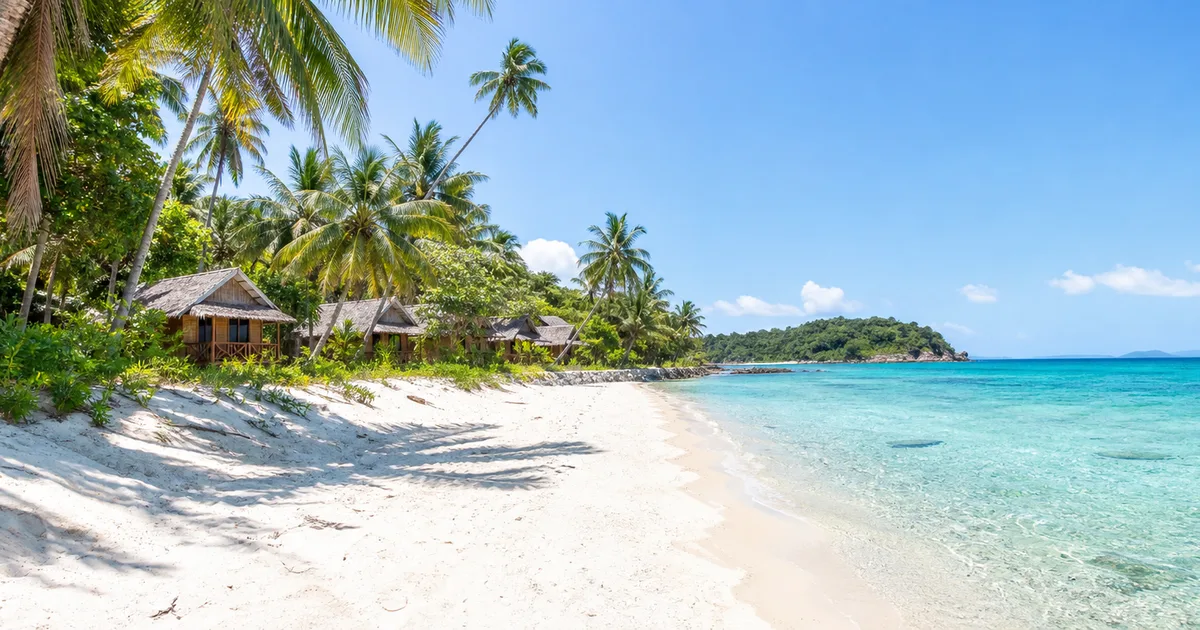
Best Beaches Near Bungalows on Phu Quoc
Long Beach, Ong Lang, Bai Sao, and Bai Khem — distances, swimming seasons, and when each beach actually makes sense for bungalow guests. Read the guide →
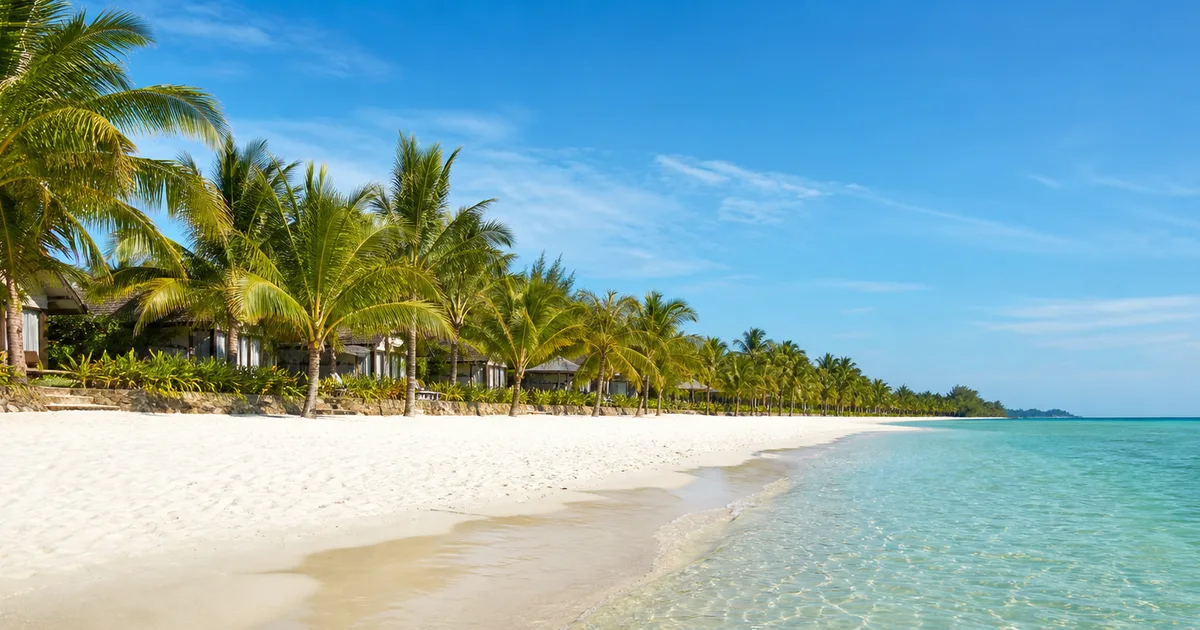
Long Beach Bungalow Guide
Everything about staying on Bai Truong: north vs south, what's walkable, the night market distance, and why December–January books out first. Read the guide →
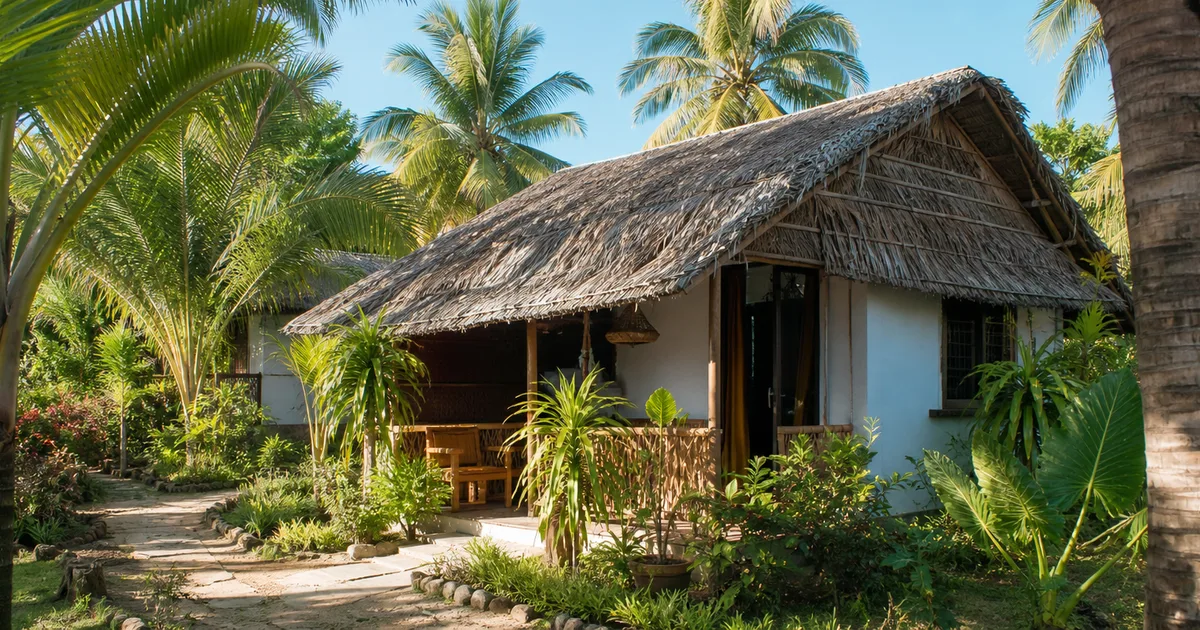
Cheap Bungalows on Phu Quoc Under $50
How to find decent budget bungalows on Phu Quoc, what $25–50/night actually buys you, and which seasons offer the best value. Read the guide →
Ready to Book Your Dry-Season Bungalow?
WhatsApp us your dates and preferred bungalow type — we'll confirm availability and the best direct price in 15 minutes. No OTA fees, free cancellation 7 days before.
★ 4.8/5 from 184 guests • Direct booking saves 15–20% • Free cancellation 7 days before
Last updated: