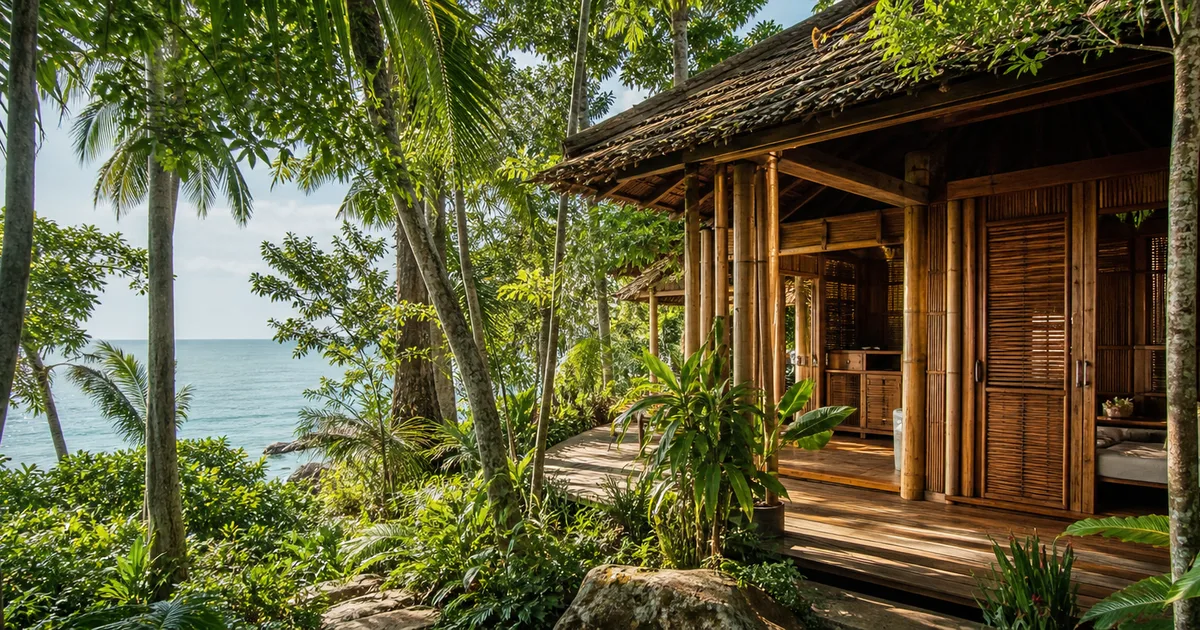
Eco Bungalows on Phu Quoc: Nature, Forest and Off-Grid Stays
By Phu Quoc Bungalow Owners · Updated July 2026 · 7 min read
- Best eco area: Ong Lang, 8 km north of Duong Dong — larger plots, more tree cover, public bay beach.
- What "eco" actually means here: bamboo or thatch construction, natural ventilation, local staff, on-site composting. Most places tick 2-3 of these.
- National park covers the north of the island (31,422 ha); accessible by motorbike from Ong Lang in about 30-35 minutes.
- Budget range: $25-55/night direct for genuine eco-budget stays. Mid-range eco resorts start at $80-120.
- Wildlife you will actually see: monitor lizards, geckos, kingfishers, fruit bats. Macaques in the north with a guide.
- Direct booking saves 15-20% versus OTA. Free motorbike with 3+ night stays covers all nature excursions.
In This Guide
What Does "Eco Bungalow" Actually Mean on Phu Quoc?
The word "eco" gets attached to a lot of places on Phu Quoc that are, in practice, concrete villas with a palm tree out front. We've been running bungalows here since 2018 and the question comes up in almost every booking conversation — so let's say it plainly.
A genuine eco bungalow on this island has some combination of the following: structure built from bamboo, thatch, reclaimed wood, or laterite (not poured concrete); natural cross-ventilation that reduces or eliminates AC dependence for most of the dry season; a plot that preserved existing trees rather than clearing for construction; waste sorting or composting on site; and staff who are local — from Phu Quoc or Kien Giang province — rather than brought in from Ho Chi Minh City.
Very few properties hit all five. Most hit two or three. Our garden bungalows use bamboo frames and local hardwood for the decks, the plots were planted around existing casuarina and coconut trees, and roughly 80% of our staff are from the island. That's honest. We're not off-grid — there's electricity and WiFi — but the structure and footprint are real. Garden bungalow details here.
Why Ong Lang Is Where Eco Bungalows Cluster
Ong Lang sits on the northwest coast about 8 km north of Duong Dong town by road. It never attracted the kind of rapid hotel development that hit the central Long Beach strip in 2015-2019, which means the plots here are larger, the tree cover denser, and the pace slower. It's the area on Phu Quoc that most closely matches what guests picture when they Google "eco bungalow."
The bay itself is compact — roughly 1.5 km of beach — flanked by forested headlands on both sides. Behind the beach you'll find cashew groves, pepper gardens (Phu Quoc pepper is a genuine local crop, not a souvenir gimmick), and a mix of small bungalow operations and family guesthouses. No large hotel towers. The road north from Duong Dong passes through rubber tree forest for the last few kilometres before the bay.
For guests who want the nature setting and the beach in the same place, Ong Lang is the answer on Phu Quoc. The sea is swimmable from November through April; the forest is there year-round. Full Ong Lang area guide with map.
How Close Are Eco Bungalows to Phu Quoc's National Park?
Phu Quoc National Park covers the entire northern third of the island — about 31,422 hectares of tropical lowland forest, mangrove coast, and marine zone. The main park entrance area is on the north coast near the village of Rach Vem, roughly 20 km by road from Ong Lang. From there it's about 30-35 minutes on a motorbike heading north on Route 45.
What's actually accessible without a guide is limited — the interior is dense forest with few marked trails. Most day visitors combine a ride to Ganh Dau cape at the island's northwest tip (good views across to Cambodia) with the Cua Can river estuary on the way back, where you can rent a kayak for about 100,000-150,000 VND per hour. The Cua Can area is about 12 km from Ong Lang and less crowded than the cape.
For guided trekking inside the park, operators in Duong Dong offer half-day and full-day walks; expect to pay 400,000-800,000 VND per person depending on group size and distance. These go into areas with actual forest density — a different experience from the coastal road loop. If this is a priority for your trip, ask us at check-in and we'll point you to who we've actually used rather than who has the most prominent sign on the main road.
What Nature Can You Actually Expect to See?
Around the bungalows and garden area: monitor lizards are the most reliable sighting. We have two regulars that come through the property most mornings, one of them close to 1.5 metres. Geckos appear on the walls every evening — the house gecko call is something guests either find charming or alarming, depending on whether they've heard it before. (It sounds like a sharp bark. It's harmless.)
Kingfishers work the shoreline at Ong Lang early morning, around 5:45-6:15 AM in the dry season. Fruit bats start coming out around 6:30 PM — you can watch them from the terrace if you're back before dark. Harder to see but present: Asian golden weaver birds in the casuarina trees, and occasionally a brahminy kite overhead.
In the national park to the north: long-tailed macaques, civets (mostly nocturnal), and several endemic species including the Phu Quoc ridgeback dog in the villages. The park officially lists over 100 bird species. Serious birders should go with a guide — the forest is thick and unguided wandering mostly produces the sound of cicadas rather than actual sightings.
One thing we've noticed: guests who stay 5+ nights see considerably more than guests on 2-night passes. The monitor lizards only started appearing at predictable times about 4 days into one guest's stay — they're less shy once there's a pattern to your presence.
Eco Factor Comparison: Area vs Area
How different parts of Phu Quoc stack up for an eco-focused stay:
| Area | Tree cover / forest feel | Budget eco bungalows | Beach access | Park/forest proximity |
|---|---|---|---|---|
| Ong Lang | High — larger plots, cashew groves | Yes, $25-55/night | 1.5 km bay, Nov-Apr swimming | ~20 km to park, 30-35 min ride |
| Long Beach (central) | Medium — palm trees, smaller plots | Yes, $25-55/night | 20 km coast, Nov-Apr peak | ~28 km to park, 40+ min ride |
| National Park north | Maximum — 31,422 ha forest | Minimal — very few stays | Remote coastline | Inside the park |
| Duong Dong town | Low — urban, mostly concrete | Hostels and guesthouses, not eco | Dinh Cau beach, short strip | ~28 km to park |
Who Does an Eco Bungalow Stay Actually Suit?
Honestly, not everyone. If you need consistent AC through the night, a pool five metres from your room, and same-day laundry, an eco bungalow — even a good one — is probably the wrong call. The nature experience and the resort experience pull in different directions, and the places that try to be both usually do neither well.
Eco bungalow stays work well for people who are used to outdoor settings, don't mind the sounds of a tropical night (geckos, frogs, the occasional dog), and find value in the slower rhythm that comes with a forested garden property. Couples who want to read in a hammock and kayak in the morning. Solo travellers who want a nature base and don't care about proximity to bars. Families with older kids who want to actually see wildlife rather than photos of it.
Budget travellers who've heard "eco" means "cheap" — that's only partly right. The $25-55 range is real for our garden bungalows and several Ong Lang properties, but it reflects the simpler construction and lower overheads, not a compromise in cleanliness or safety. The rooms are small. The furnishings are local. The breakfast, when included, is Vietnamese not buffet-resort. That's the trade.
How Do You Avoid Booking a "Greenwashed" Eco Bungalow?
Three questions cut through it quickly. Ask the property: what are the walls and roof made from? Do you compost or sort waste on site? Are your staff local to Phu Quoc? A place that can answer all three directly — with specifics, not marketing language — is probably the real thing.
The obvious red flag: a page full of forest photography with a price above $150/night and no mention of construction materials. That's bamboo-decor resort territory. The subtler flag: places that describe themselves as "eco" but mention a fully air-conditioned breakfast room, a swimming pool, and marble bathroom tiles in the same listing. Those things aren't wrong in themselves, but they don't add up to an ecological operation.
One practical filter: check whether the property has a photo of the actual structure from outside. Genuine bamboo and thatch bungalows look a certain way. If all the photos are interior shots of white linen and a phone on a wooden tray, you're probably looking at a concrete box with a thatched umbrella over the sun deck.
For the beach-and-forest combination specifically, the Ong Lang bungalow area guide covers the full range of what's available in that bay, and our beach guide maps out which beaches suit which stay type. Direct booking (WhatsApp or email us) always costs less than through Booking.com or Airbnb — we pass the commission difference to you as the direct price. Ong Lang area overview here.
Frequently Asked Questions
What makes a bungalow on Phu Quoc 'eco'?
On Phu Quoc, 'eco bungalow' typically means a structure built from bamboo, thatch, or reclaimed wood, set within a garden or forested plot rather than on cleared concrete. Practically: natural ventilation instead of heavy AC reliance, solar or low-wattage lighting, compost or basic waste sorting, and a policy of not cutting existing trees during construction. Very few places tick all boxes — most tick two or three.
Which area of Phu Quoc is best for eco bungalow stays?
Ong Lang, on the northwest coast roughly 8 km north of Duong Dong town, is the strongest match for an eco bungalow stay. The area has retained more forest cover than central Long Beach, properties sit on larger plots, and the bay beach is public and uncrowded. The northern tip of the island (close to Phu Quoc National Park) is more remote but has very limited accommodation and poor road access.
How far is Ong Lang from Phu Quoc National Park?
Ong Lang village is roughly 20 km by road from the main national park entrance on the northern coast. The park covers the northern third of the island. From Ong Lang, the drive north along Route 45 to the park boundary takes about 30-35 minutes on a motorbike.
Is Phu Quoc National Park open to visitors and what is inside?
Phu Quoc National Park covers about 31,422 hectares in the north of the island and is open to visitors, though most of the interior is dense forest with limited marked trails. The coastal fringes offer snorkelling and fishing villages. Day trips typically involve the road north to Ganh Dau cape, the Cua Can river area, or guided trekking arranged through local operators in Duong Dong.
What wildlife can I see near eco bungalows on Phu Quoc?
In and around garden bungalows in Ong Lang and Long Beach you can expect monitor lizards (common, up to 1.5 m), several gecko species, kingfishers along the shoreline, and fruit bats at dusk. The national park in the north holds macaques, civets, and endemic bird species including the Phu Quoc crocodile lizard, though sightings require patience and a guide.
Do eco bungalows on Phu Quoc have air conditioning?
Most budget eco bungalows ($25-55/night) offer ceiling fans and cross-ventilation by design, with AC available in some rooms at an added nightly rate (typically 100,000-150,000 VND extra). True off-grid stays without AC exist but are rare and usually above $80/night. Our garden bungalows have fans as default and AC on request — most guests in November-February find a fan sufficient.
What is the price range for eco bungalows on Phu Quoc?
Budget eco bungalows on Phu Quoc run $25-55 per night direct, concentrated on Long Beach and in Ong Lang. Mid-range eco resorts start at $80-120. Anything marketed as 'eco' above $150/night is typically a boutique resort with bamboo decor rather than a genuinely low-impact operation. Direct booking saves 15-20% versus OTA rates.
Is Ong Lang Beach good for swimming near eco bungalows?
Ong Lang is calm and swimmable during the dry season (November to April). The bay's shape keeps it slightly calmer than open Long Beach in light swell. The sea floor mixes sand and rock in patches, so water shoes help. Outside the dry season the monsoon can push floating debris into the bay, though it remains swimmable on most days.
Can I reach eco bungalows in Ong Lang without a motorbike?
Ong Lang is 8 km north of central Long Beach. Grab cars operate on Phu Quoc and cover the route; a ride from Duong Dong to Ong Lang costs roughly 60,000-90,000 VND. A motorbike is much more practical for exploring the area independently — we include one free with stays of 3 nights or more.
What should I look for when booking an eco bungalow on Phu Quoc to avoid greenwashing?
Ask the property three specific questions before booking: what the walls and roof are made from, whether they compost or sort waste on site, and whether staff are local hires or brought in from the mainland. A place that answers all three directly is probably genuine. Vague references to 'being close to nature' with polished resort photography are the main signal that the 'eco' label is cosmetic.
About the Authors
We've owned bungalows on Long Beach since 2018 and spent a lot of time at Ong Lang before that, when the north end of Phu Quoc was genuinely difficult to find accommodation in. The eco question comes up at check-in almost every week. This guide tries to give the same honest answer we give in person: here's what's real, here's what's marketing, here's where to go if the nature side of the island matters to you. Send us a correction if anything here has changed on the ground.
Related Guides
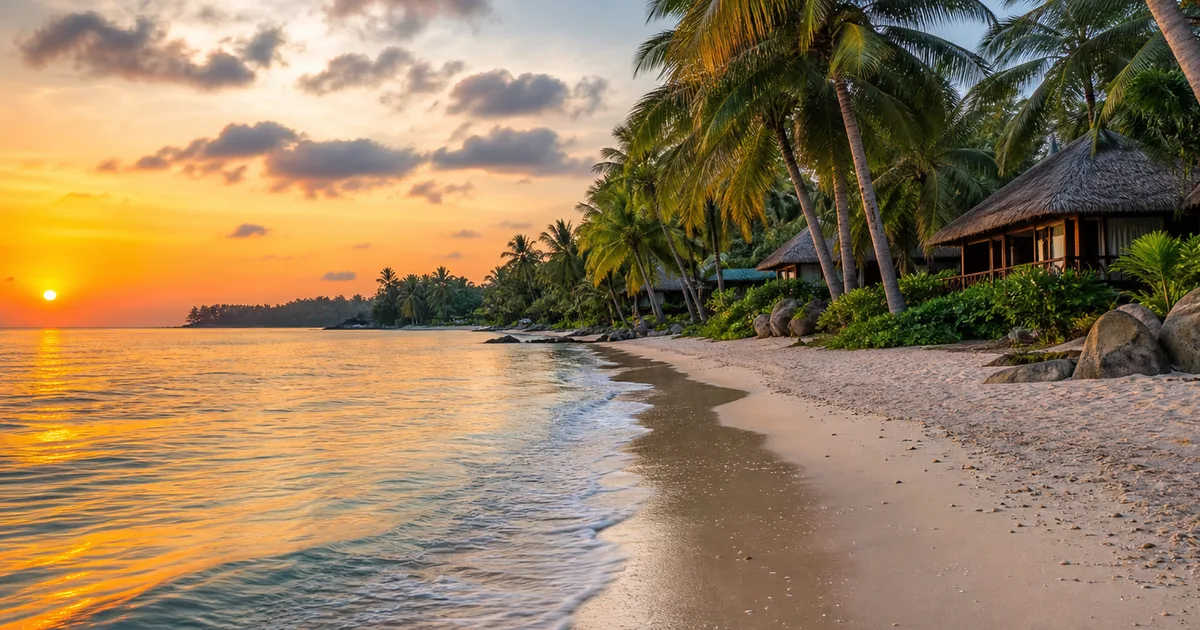
Ong Lang Beach — Bungalow Area Guide
The quiet bay 8 km north of Long Beach: what the area is like, where to eat, and how it compares to the main strip for a bungalow base. Read the guide →
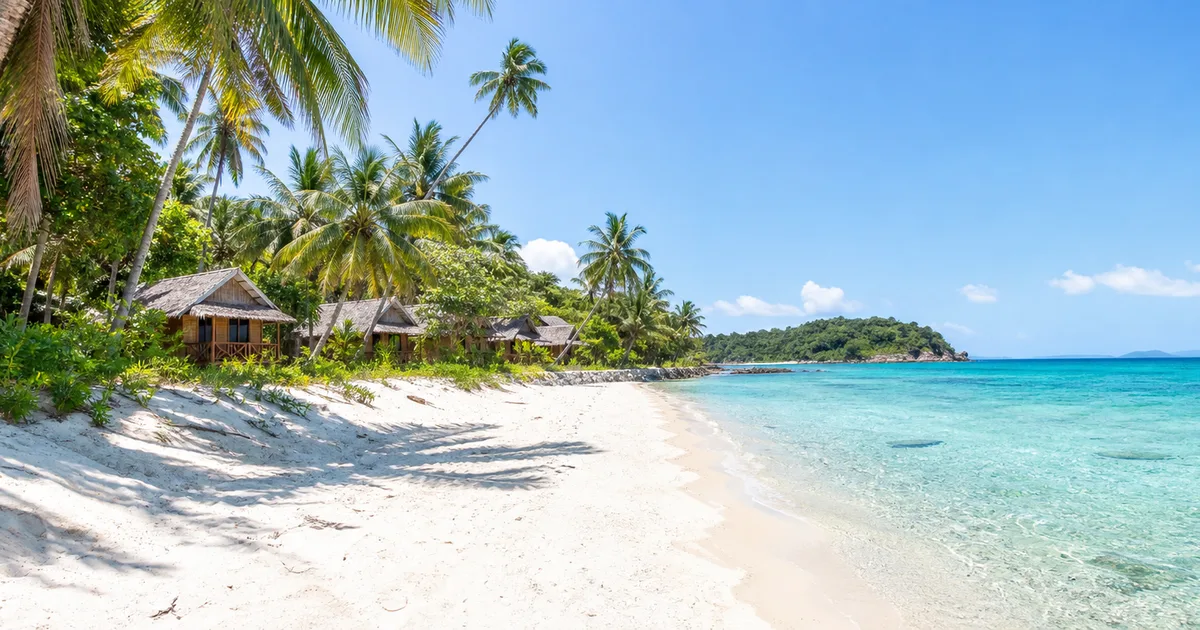
Best Beaches Near Bungalows on Phu Quoc
Long Beach, Ong Lang, Bai Sao and Bai Khem — distances, swim conditions, and what each beach actually suits for bungalow guests. Read the guide →
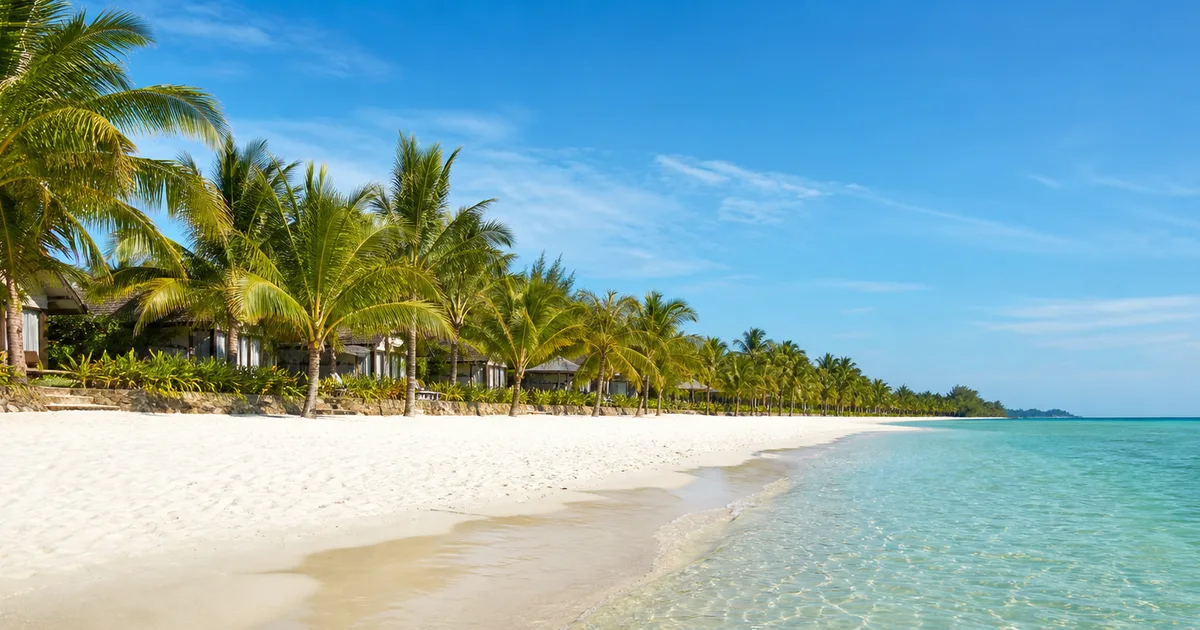
Long Beach Bungalow Guide
Everything about staying on Bai Truong: north vs south, what's walkable, the night market distance, and why December-January books out first. Read the guide →
Ready to Book Your Phu Quoc Bungalow?
WhatsApp us your dates and preferred area — we'll confirm availability and the best direct price in 15 minutes. No OTA fees, free cancellation 7 days before.
★ 4.8/5 from 184 guests • Direct booking saves 15-20% • Free cancellation 7 days before
Last updated: